 Top HR Tools

Key takeaways
- Implementation is often a separate quote. I ask for it in the same week as the license.
- Seat minimums and annual floors belong in the same cell as the rate.
- A module shown in the demo can sit on a higher tier. I check the tier.
- If the page has no price, I leave the cell blank.
A pricing page can be honest and still incomplete. The rate is there, and the bill is the rate plus a minimum, plus implementation, plus the tier that actually contains the feature from the screenshot.
The rate is the easy number
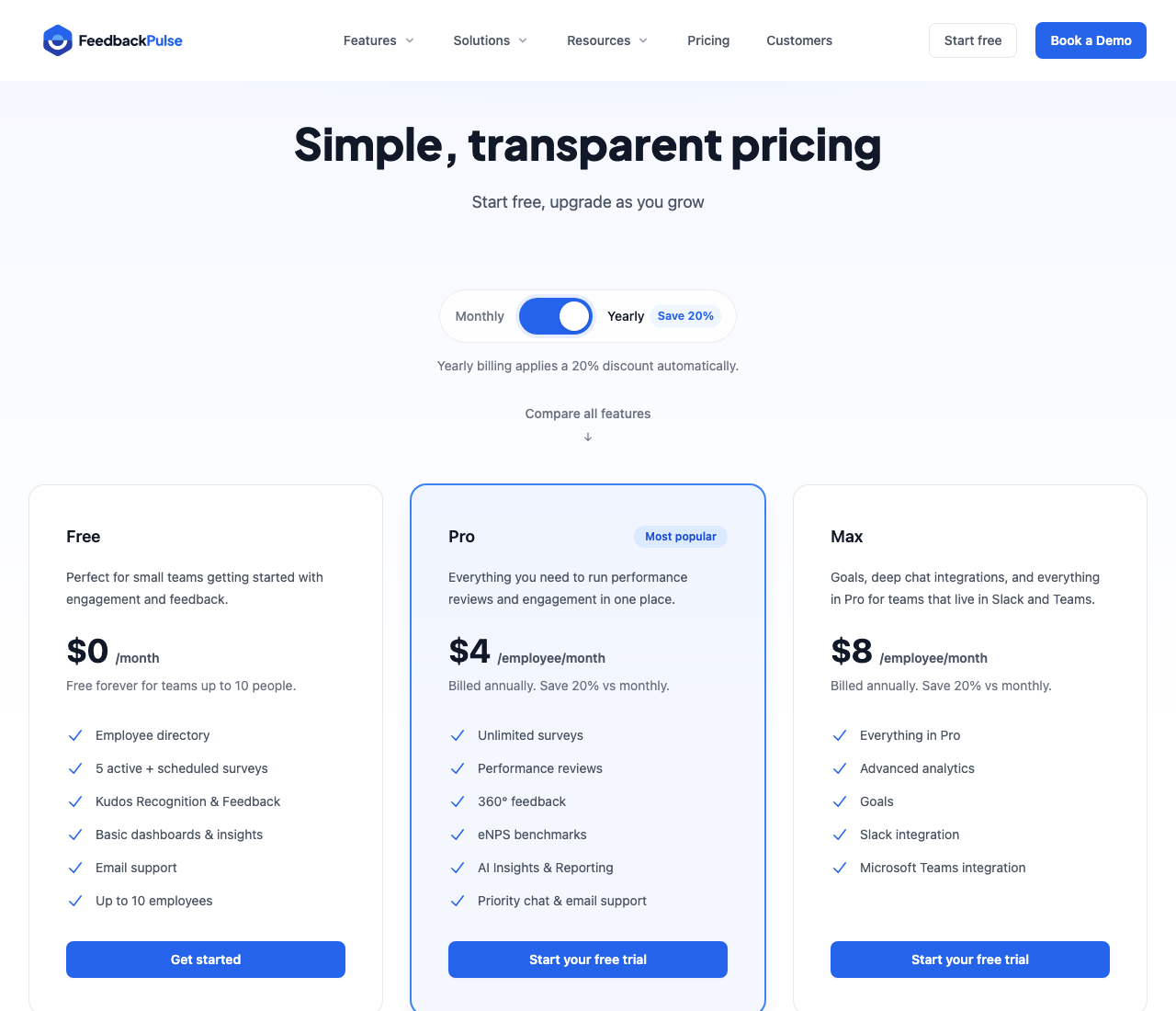
FeedbackPulse Pro at $4 per employee per month, billed annually, is a rate I can put in a spreadsheet. So is Max at $8. The page does not add a dollar account minimum. That is unusual enough that I write it down. It does not mean services, taxes, or a later add-on are free. It means I did not find a floor on the page.
The floor changes the rate
Workleap’s published annual prices and Microsoft’s 50-seat minimum are floors I can cite. I keep the working list of those in account floors. A 30-person company does not pay 30 times a rate that starts at 50 seats.
Implementation is its own quote
I ask for implementation in writing: data import, the manager hierarchy, the first survey or the first review cycle, and training. If the seller says it is included, I ask them to point at that sentence. If they cannot, I treat it as extra until the order form says otherwise.
The screenshot’s tier
Goals on a Max tier, payroll on a module we have not quoted, or a learning catalog that belongs to a different product: I match the demo to the line item. The methodology is where I say we do not invent a price the page withheld.